3D cell culture
Find suitable products, scientific resources or answers to your questions within our technical library FAQ.
Checkout using your account
This form is protected by reCAPTCHA - the Google Privacy Policy and Terms of Service apply.
Checkout as a new customer
Creating an account has many benefits:
Mesenchymal stem cells (MSCs) are multipotent stromal cells with immunomodulatory and regenerative properties that continuously secrete vesicles into their surrounding environment. These particles are known as extracellular vesicles (EVs). EVs carry proteins, lipids, and nucleic acids, shuttling biological information between cells throughout the body. Because of their cargo-loading capacity and ability to travel through biological fluids, EVs have emerged as an attractive platform for targeted drug delivery
EVs can be derived from a variety of cell sources, including dendritic cells, T cells, platelets, and endothelial cells. Among these, MSC-derived extracellular vesicles (MSC-EVs) have been extensively studied as potential carriers for targeted drug delivery. Ready to explore what makes MSC-EVs such a powerful platform? Read on.
MSC-derived extracellular vesicles act as cell-free mediators of immunomodulation. They regulate both innate and adaptive immune responses, helping to reduce inflammation and support tissue repair.1 MSC-EVs carry a variety of bioactive molecules, including miRNA, lncRNA, cargo proteins, and lipids, which they deliver to immune cells.
MSC-EVs also show protective effects in a range of conditions, including central nervous system (CNS) disorders, myocardial infarction, liver injury, lung disease, ulcerative colitis, and kidney injury.2 This makes them an attractive tool for therapeutic use.
Stem cell-derived extracellular vesicles are pushing the field toward what researchers call “cell therapy 2.0”, a cell-free approach that retains many benefits of MSC therapy while reducing some of its risks.3
Unlike whole-cell transplants (e.g., stem cell immunotherapy), EVs have a lower tendency to trigger immune rejection.4 They cannot form tumors directly. These safety advantages make stem cell-derived extracellular vesicles an attractive platform for targeted drug delivery systems.4
Exosomes, a subtype of EV, in particular, have low immunogenicity.5 Their surface proteins can be modified through genetic engineering to improve targeting to a specific target cell or target site.5 This makes exosomes highly adaptable as drug carriers.
Several preclinical and clinical studies are now exploring MSC-EVs as targeted delivery tools:
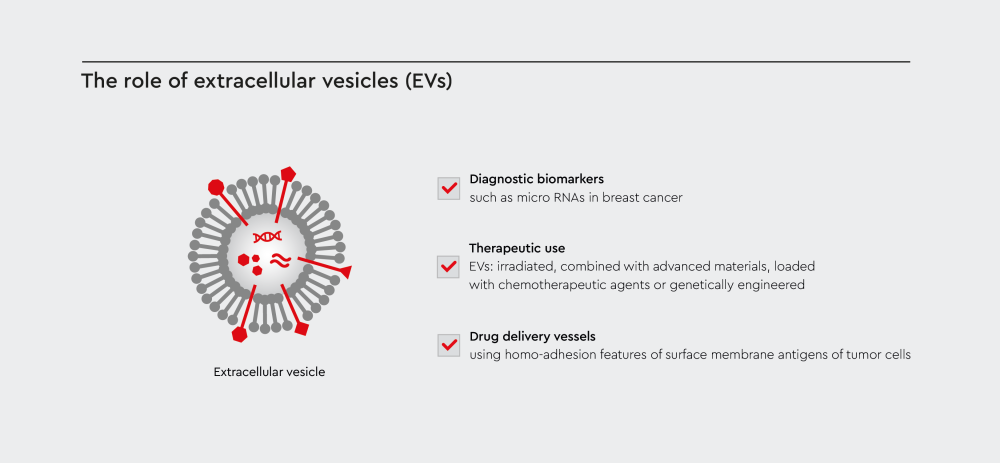
Figure 1: Roles of extracellular vesicles (EVs) in cancer diagnosis and therapy.
These programs signal a move of extracellular vesicles from fundamental research to studies of their potential use as a tool for targeted drug delivery.
Large-scale production of MSCs is one of the biggest challenges in the use of MSC-EVs as vehicles for drug delivery.9 A single human therapeutic dose may require EVs from hundreds of millions of MSCs.9 That demands large cell numbers, and it demands consistency.
Several factors influence MSC-EV production yield and quality, as summarized below.
| Factor | Effect on EV yield and quality | Implication for clinical use |
|---|---|---|
| MSC variability and cell source9,10 | Influence EV yield and biological quality; high-passage MSCs produce EVs with lower activity and altered cargo composition. | Well-characterized, low-passage MSCs are preferred for consistent, clinical-grade EV isolation. |
| Media choice9 | Important for scalable manufacturing and translation of MSC-derived extracellular vesicles. | Defined or xeno-free MSC culture media reduce batch-to-batch variability, improve reproducibility, and support scalable, clinical manufacturing of MSC-EVs. |
Table 1: Factors influencing MSC-EV production yield and quality.
Because EV-based therapies depend on large quantities of healthy, consistent MSCs, starting material quality isn’t something to optimize later. It needs to be built in from the very beginning, at the research stage, long before clinical development begins.
Consistency in MSC culture and EV isolation is what makes high yield and high reproducibility achievable. Variations in seeding density, passage number, or media formulation can influence the amount and quality of MSC-derived EVs, and establishing reproducible protocols early can prevent failures down the line.
At PromoCell, we offer a comprehensive range of of mesenchymal stem cell products for both research and clinical applications, including primary MSCs and optimized culture media. Characterized for consistent and reproducible performance, these products support key upstream steps in MSC-EV workflow development, from MSC selection and expansion to controlled culture conditions for scalable MSC-derived extracellular vesicle production.
| MSC-EV research step | What researchers need | PromoCell solutions |
|---|---|---|
| MSC selection | Well-characterized primary MSCs | Human MSCs from different tissue sources |
| MSC expansion | Consistent proliferation | MSC growth media |
| EV production | Controlled culture conditions | Serum-free/xeno-free media options |
Table 2: PromoCell products supporting upstream MSC-EV workflow development
References
Expand
Low-serum cell growth medium for mesenchymal stems cells.
Serum-free and xeno-free cell culture medium for proliferation of mesenchymal stem cells. Fibronectin or vitronectin coating required.
Manufactured in compliance with the EXCiPACT™ GMP certification standard.
Serum-free and xeno-free cell culture medium for proliferation of mesenchymal stem cells. Fibronectin or vitronectin coating required.
Our popular products
 Product
Mesenchymal Stem Cell Growth Medium 2
Product
Mesenchymal Stem Cell Growth Medium 2
 Product
PromoExQ MSC Growth Medium XF (prf)
Product
PromoExQ MSC Growth Medium XF (prf)
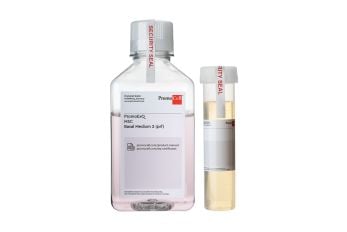 Product
PromoExQ Mesenchymal Stem Cell Growth Medium 2
Product
PromoExQ Mesenchymal Stem Cell Growth Medium 2
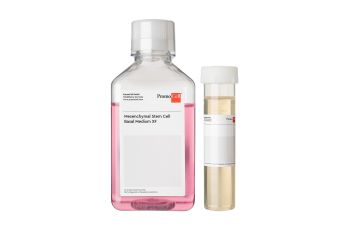 Product
Mesenchymal Stem Cell Growth Medium XF
Product
Mesenchymal Stem Cell Growth Medium XF
Have a look at other Research Areas
PromoCell uses HubSpot to provide LiveChat support. This feature is currently blocked due to your cookie preferences.
Accept cookies to enable LiveChat