
HLA-typed human primary cells
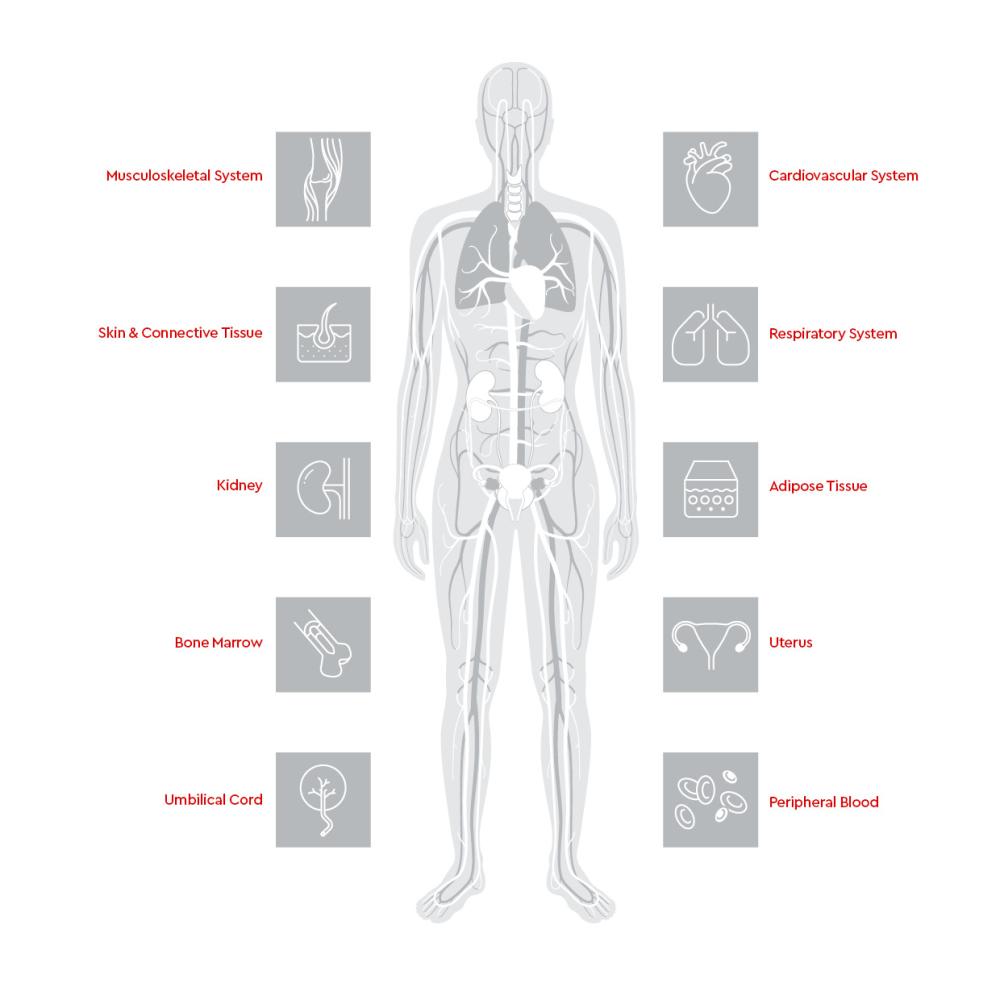
Access HLA-typed human primary cells and peripheral blood mononuclear cells (PBMCs) with complete high-resolution HLA typing reports, so you can start your studies with defined immune context from day one. With the rapid development of immunotherapies, adoptive cell therapies, and personalized medicine, custom HLA-typed cells are becoming increasingly important for preclinical research, drug development, cell therapy development, and safety assessment.
With more than 100 HLA-typed donors in stock, we provide a detailed HLA typing certificate for each donor — so that you can stop spending valuable time on primary cell typing.
What is HLA and why does it matter?
Human leukocyte antigens (HLA) are cell surface proteins that regulate the immune system through antigen presentation and the activation of immune responses. HLA genes are extremely diverse, with more than 2,000 HLA class I alleles and over 600 HLA class II alleles.1A specific HLA type can be associated with an autoimmune disease2 or serve as a biomarker3 to show how cells respond to treatments. They have also become important in understanding the role of the immune system in autoimmune diseases, defense against infections4, immunogenicity assessment, transplantation research, and personalized medicine.5 Because individual HLA alleles can influence immune recognition and treatment responses differently, researchers often use high-resolution HLA typing to better assess immune compatibility and HLA-associated responses.
Understanding this diversity is essential if you want to generate data that translates to real patient populations.
Why choose PromoCell for HLA-typed human primary cells?
- Immediate access to our inventory of more than 100 HLA typed donors, characterized for Class I and Class II alleles.
- Why it matters: Reduce donor sourcing time with ready-to-access, pre-characterized HLA-typed tonors.
- Comprehensive HLA typing reports, covering Class I (HLA-A, -B, -C) and Class II (DPA1/DPB1, DQA1/DQB1, DRB1/DRB345), available for cells derived from tissues such as lung, kidney, the cardiovascular system, and more.
- Why it matters: Support informed donor selection with complete HLA data across multiple tissue types.
- High-resolution HLA typing data with 4-digit allele resolution, e.g., HLA-A*02:01.
- Why it matters: Enable precise donor matching with allele-level HLA typing.
- Access to more than 40 cell types, including donor-matched cell types.
- Why it matters: Source multiple cell types from the same donor for donor matching and more consistent experimental design.
- HLA typing across a diverse donor pool representing different genders and ethnic backgrounds.
- Why it matters: Identify donor models that align with your research requirements.
- All data included in the Certificate of Analysis (CoA).
- Why it matters: Ensure traceability with fully documented donor characterization.
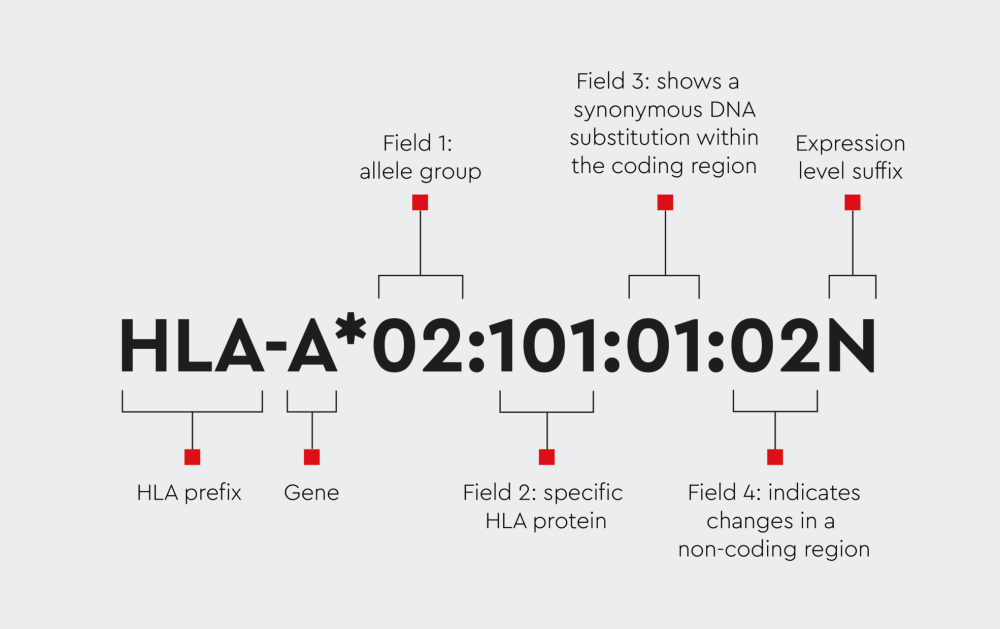
Figure 1. Structure of HLA allele nomenclature illustrating the prefix, gene, allele group, protein-specific variants (Fields 1–2), synonymous coding changes (Field 3), non-coding variations (Field 4), and expression suffix.
Enable faster, more cost-efficient testing by eliminating the need for additional HLA screening or negative testing steps.
What can HLA‑typed primary cells be used for in preclinical research?
Use HLA-typed primary cells and PBMCs in preclinical immunology and immunotherapy research to:
- Evaluate TCR and CAR-T cell specificity to identify potential off-target interactions earlier in development.
- Assess cross-reactivity, alloreactivity and immune compatibility across HLA alleles and donor backgrounds using diverse tissue-derived cell types.
- Screen candidates for immuno-oncology research and accelerate the development of new cancer therapies.
- Discover biomarkers and support patient stratification studies for more targeted and personalized treatment approaches.
- Extend the use of HLA-typed cells beyond immunotherapy and cell therapy research to applications such as transplantation research and vaccine development.
Generate more relevant human data while reducing reliance on animal testing by using HLA-typed primary cells.
Ready to find the right HLA-matched donor? Tell us your HLA requirements and get matched donor cells.
FAQs
References
Expand
- Robinson, J., Mistry, K., McWilliam, H., et al. The IMGT/HLA database. Nucleic Acids Research. 2011;39(suppl_1):D1171–D1176. doi: 10.1093/nar/gkq998
- Liu B, Shao Y, Fu R. Current research status of HLA in immune-related diseases. Immun Inflamm Dis. 2021;9:340–350. doi: 10.1002/iid3.416
- Jiang C.Y., Zhao L., Green M.D., et al. Class II HLA-DRB4 is a predictive biomarker for survival following immunotherapy in metastatic non-small cell lung cancer. Sci Rep. 2024;14:345. doi: 10.1038/s41598-023-48546-y
- Augusto D.G., Murdolo L.D., Chatzileontiadou D.S.M., et al. A common allele of HLA is associated with asymptomatic SARS-CoV-2 infection. Nature. 2023;620:128–136. doi: 10.1038/s41586-023-06331-x
- Singer J., Lewitzky S., Leroy E., et al. A genome-wide study identifies HLA alleles associated with lumiracoxib-related liver injury. Nat Genet. 2010;42:711–714. doi: 10.1038/ng.632