
Macrophages are immune cells that defend the body by detecting and destroying bacteria, fungi, and viruses. They also support blood vessel formation and help regulate cell stability - and more. However, they are not only a key element of our immune defense; they can also play a role in destroying tissue, and promoting diseases. This makes macrophages extremely interesting for research, and they show extraordinary potential for new therapeutic approaches.

Master of the weightless Macrophages:
Professor Ullrich from the University of Zurich teaches his cells to fly. With his group, he investigates impaired functions of immune cells in microgravity. The photo was taken at the 19th parabolic flight campaign by the DLR in 2013. Picture kindly provided by Professor Oliver Ullrich.
They taught their cells to fly. That’s what researchers of the University of Zurich had to do to fulfill a prerequisite for their experiments. They needed to make their research subject weightless. Professor Oliver Ullrich and his team wanted to examine the impaired function of monocytes and macrophages in microgravity.1 Sending macrophages to parabolic flights is one of the many research projects that have advanced these special cells to celebrity status in the scientific community. High-flying experiments such as these provide new opportunities to expand our knowledge, and offer potential benefits for medical research.
When Ilya Metchnikoff first described macrophages and their phagocytic nature more than 100 years ago, he couldn’t have imagined their variety in even his wildest dreams. These cells are so functionally diverse that they are the most plastic cells of the hematopoietic system. Their role as “big eaters” puts them in the first line of defense against infectious agents. Microbes attack our body continuously, which leads to the activation of the innate immune system and to protective inflammatory responses.
However, the central role macrophages play in the immune system cannot overshadow their importance in the development and homeostasis of many tissues. Studies have shown their importance during erythropoiesis and angiogenesis, as well as in brain development.2 Macrophages also help maintain a balance in organs such as the liver, pancreas and fat tissue, and they play an important role in regulating cell synergy and supporting our body as it adjusts to changes in the environment.2 And since they are also involved in many diseases, macrophages are increasingly important for biomedical research.
What are the main types of macrophages and their function?
Many different types of macrophages exist. These professional phagocytes are a heterogeneous population of functionally diverse cells with different origins. They can rapidly change their phenotype in response to variations in their environment. Researchers have tried to classify macrophages based either on their belonging to the mononuclear phagocytic system, their origin or their functional phenotype. Among these approaches, classification by activation state is widely used. The table below summarizes the key characteristics of the two major typs, M1 and M2 macrophages.
| Macrophage type | Activation | Function |
|---|---|---|
| M1 macrophages | IFN-γ (Interferon gamma) | Pro-inflammatory; involved in pathogen resistance and elimination |
| M2 macrophages | IL-4 (Interleukin-4) | Anti-inflammatory; maintain tissue integrity; can promote tumor growth in several cancers3 |
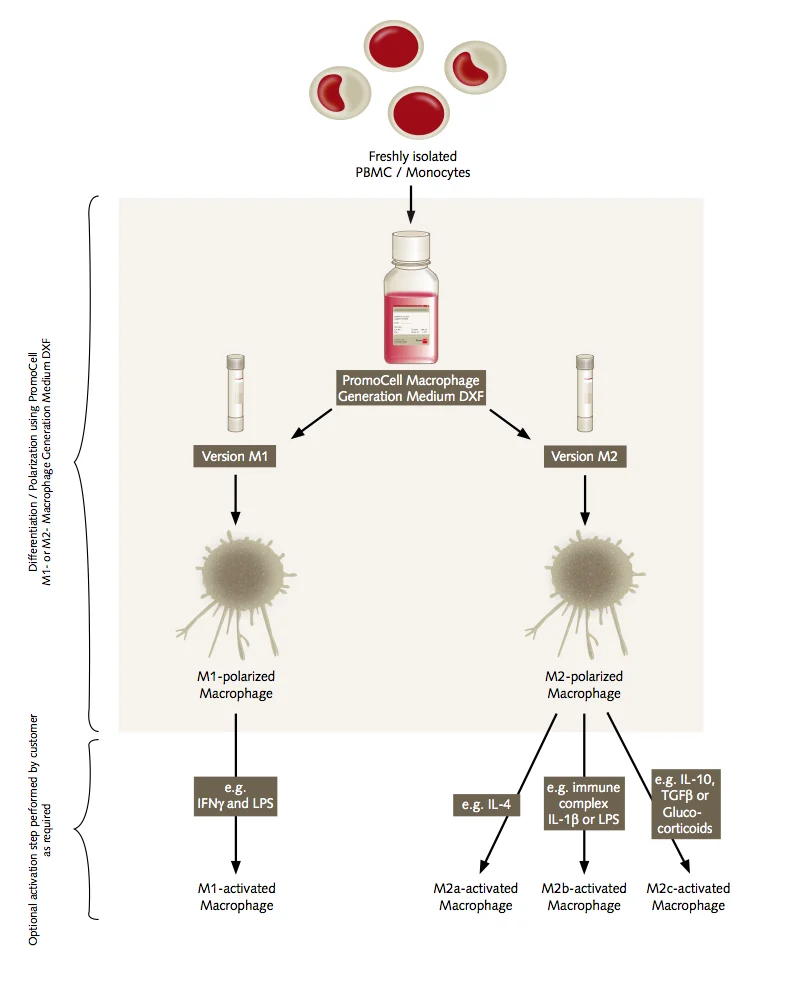
Figure 1: Straightforward generation of functional macrophages.
PromoCell´s Macrophage Generation Medium DXF allows for generation of M1- or M2-polarized macrophages directly from peripheral blood mononuclear cells (PBMC).
What are the research applications of macrophages?
The research applications of macrophages are vast, and in vitro assays are increasingly used in a wide range of research areas, including immunology, bacteriology and parasitology, as well as in biomedical and transplantation studies. Two advantages of macrophages in cell culture are that they are relatively easy to generate and to cultivate.
Macrophages are found in almost every organ. They protect the human body, but are also involved in the pathogenesis of diseases, including autoimmune disorders, chronic inflammatory syndromes, fibrosis and cancer.
How do macrophages contribute to disease development?
Macrophages ("big eaters") contribute to various diseases:
- Cancer development and progression: These phagocytes are found in solid tumors, where they are associated with poor prognosis.4 Tumor-associated macrophages can help the metastatic spread of tumor cells, as they stimulate their migration and the invasion of different tissues, and suppress immune responses.
- Chronic inflammation and disease: Macrophages also play an important role in the development of chronic diseases, such as arteriosclerosis, asthma, inflammatory bowel diseases, rheumatoid arthritis, and multiple sclerosis. Following tissue damage caused by infections or injuries, these cells are recruited to affected tissues to eliminate invaders and restore tissue integrity. At the same time, regulatory macrophages help prevent excessive immune responses that could cause collateral damage. However, this regulation is not always successful, resulting in chronic inflammation or autoimmune processes. In responding to bacteria, the body walks a tightrope between fighting invaders and regulating immune cells to prevent excessive tissue damage.
Professor Ullrich’s microgravity experiments helped researchers to better understand factors that could inhibit the macrophages many functions. In vitro assays with macrophages showed that some intravenous iron preparations for the treatment of anemia in chronic kidney disease patients impair the differentiation from monocytes to macrophages and also affect mature dendritic cells.5
How to generate macrophages in vitro
If you want to work with macrophages in vitro, you need a sufficient number and purity. The problem is, although mature differentiated macrophages can be found in various human tissues, they are present only in very low numbers. Moreover, they cannot proliferate in vitro. The easiest way to obtain macrophages is to isolate peripheral blood cells and differentiate them with specific media. These monocyte-derived macrophages (MDM) are functionally equal to tissue macrophages.
PromoCell’s M1- or M2-Macrophage Generation Media are defined and animal component-free complete media systems for the generation of MDM. They allow the differentiation of macrophages directly from peripheral mononuclear blood cells (PBMC) without the need for additional bead-based purification of CD14+ monocytes, enabling the use of healthy, untouched cells without the interference of animal stimuli.
Thanks to major advances in the understanding of macrophages’ biology, scientists are rapidly developing new therapeutic targets. Their efforts focus on enhancing or inhibiting macrophages’ responses to different stimuli, and the results of such experiments might help cure infectious diseases, autoimmune diseases – and even cancer. Such sky-high ambitions are certainly worth a session of weightlessness.
References
Expand
- Paulsen K, Tauber S, Dumrese C, et al. Regulation of ICAM-1 in Cells of the Monocyte/Macrophage System in Microgravity. BioMed Research International. 2015;2015:538786. doi:10.1155/2015/538786
- Wynn TA, Chawla A, Pollard JW. Macrophage biology in development, homeostasis and disease. Nature. 2013;496(7446):445-455. doi:10.1038/nature12034
- Komohara Y, Takeya M. Macrophage reprogramming in tumor microenvironments and antitumor immunity. Cancer Science. 2014;105(1):1-8. doi:10.1111/cas.12342
- Kishore B. Challagundla, et al. Exosome-Mediated Transfer of microRNAs Within the Tumor Microenvironment and Neuroblastoma Resistance to Chemotherapy. Journal of the National Cancer Institute. 2015;107(7):djv135. doi:10.1093/jnci/djv135
- Fell LH, Seiler-Mußler S, Sellier AB, Rotter B, Winter P, Sester M, Fliser D, Heine GH, Zawada AM. Impact of individual intravenous iron preparations on the differentiation of monocytes towards macrophages and dendritic cells. Nephrology Dialysis Transplantation. 2016;31(11):1835-1845. doi:10.1093/ndt/gfw045
Application Note “Differentiation of M1- or M2-Macrophages from PBMC/Monocytes“ (Free Download)
Learn within our latest application note how to differentiate monocytes or peripheral blood mononuclear cells into M1- or M2-macrophages.
Monocyte-derived, polarized, non-activated, primary human macrophages. Polarization in M1-Macrophage Generation Medium XF (incl. GM-CSF).
Monocyte-derived, polarized, non-activated, primary human macrophages. Polarization in M2-Macrophage Generation Medium XF (incl. M-CSF).
Chemically defined, non-enzymatic detachment solution optimized for gentle detachment of strongly adherent macrophages.
User-customizable, serum-free and xeno-free medium for generation of macrophages from fresh monocytes. Medium does not include cytokines.
Serum-free and xeno-free medium for generation of M2 macrophages from fresh monocytes.
Serum-free and xeno-free medium for generation of M1 macrophages from fresh monocytes.
Sterile and ready-to-use solution for separation of lymphocytes from whole blood or buffy coats.
Related products