Choose your region


Cancer stem cells: What you should know

Cancer stem cells (CSCs), also known as cancer stem-like cells, represent a small population of cells within the tumor. Although rare, CSCs are promising therapeutic targets as they can rebuild entire tumors, promote resistance to cancer treatments, and drive cancer progression. Therefore, understanding the biology of CSCs is vital for developing more effective cancer therapies and improving treatment outcomes.
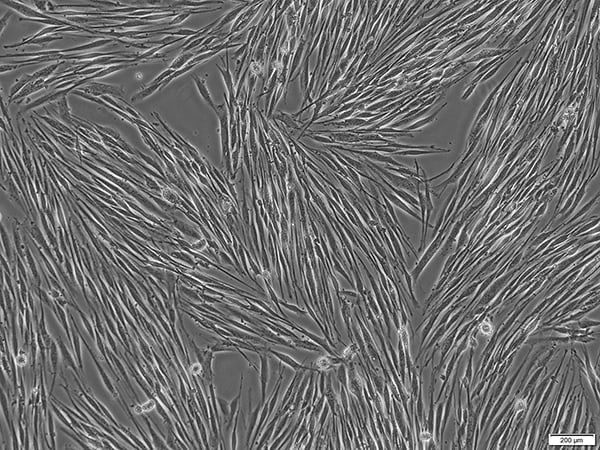
Primary cancer stem cell culture from GIST in PCCS.Primary cancer stem cell culture from GIST in PCCS.

What are cancer stem cells?

Cancer stem cells are rare, immortal cells within tumors that display the hallmark characteristics of stemness.1 Stemness refers to the ability of cells to self-renew, give rise to differentiated cells, and interact with their environment to maintain a balance between quiescence, proliferation, and regeneration.1,2 CSCs can self-renew through cell division while simultaneously generating the different cell types that constitute a tumor.3


Key properties of cancer stem cells:4,5
 

  • Self-renewal: They can divide to produce identical copies of themselves.
  • Differentiation: They generate various cell types found in tumors.
  • Tumor initiation: They can form new tumors when transplanted.
  • Therapy resistance: They can survive when exposed to cancer treatments.
  • Metastasis: They promote cancer spread to distant sites.
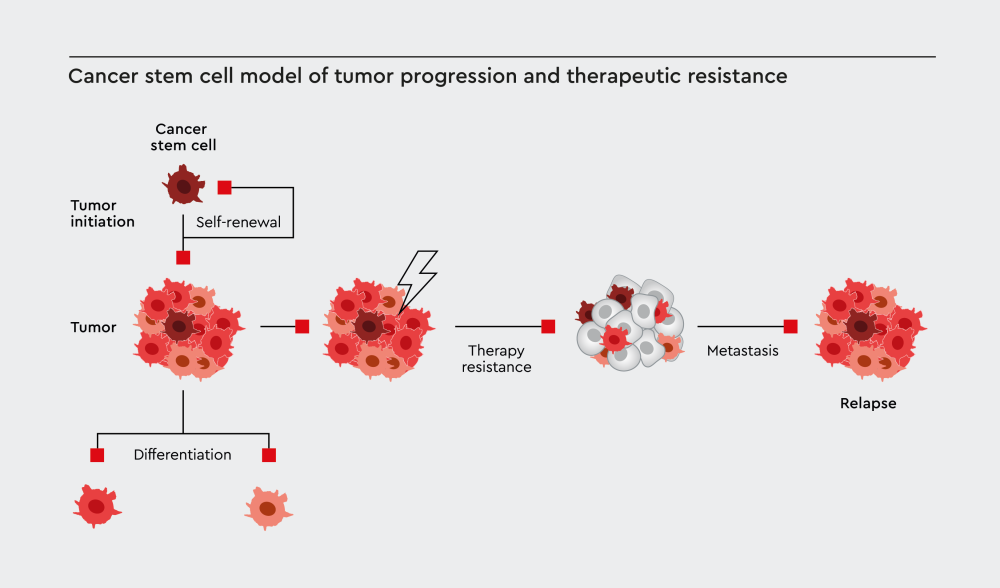
Illustration of the cancer stem cell model in tumor progression and therapeutic resistance.Illustration of the cancer stem cell model in tumor progression and therapeutic resistance.

Figure 1: Cancer stem cells drive tumor initiation through self-renewal, maintain tumors through differentiation into diverse cancer cell populations, contribute to therapy resistance, and ultimately lead to metastasis and disease relapse. 

Since their discovery, researchers have identified CSCs in various tumor types, making them attractive cell targets for cancer treatments.4,5 The discovery of CSCs has changed our understanding of tumor biology and opened new avenues for therapeutic intervention.

CSCs vs. regular cancer cells

The characteristics of cancer cells can vary immensely. Solid tumors contain heterogeneous populations of cancer cells with different levels of malignant potential. This diversity plays an important role in cancer progression and treatment resistance.6,7


Cancer stem cells can reproduce themselves indefinitely, sustain long-term cancer growth, initiate new tumors, resist conventional therapies, and drive metastasis and recurrence. In contrast, regular cancer cells have limited self-renewal capacity, are more susceptible to cancer treatments, cannot maintain long-term tumor growth, and have limited ability to start new tumors.8


These differences have implications for cancer therapy. Traditional treatments like chemotherapy and radiation may shrink tumors by killing the bulk of cancer cells, but if CSCs survive, the tumor can regenerate. This explains why some cancers return after initially successful treatment.4

The cancer stem cell hypothesis

According to the cancer stem cell hypothesis, tumors are organized hierarchically, just like normal tissues. CSCs are at the apex of this hierarchy, giving rise to all other cell types in the tumor through multiple rounds of cell division and differentiation.9,10


This model suggests that only a small subset of cancer cells, those with stem-like properties, can initiate and maintain tumors. This hypothesis also implies that tumor growth relies on CSCs, and that eliminating CSCs could prevent tumor recurrence.11


Current scientific consensus supports this hypothesis while acknowledging that CSC biology is more complex than initially thought. Research has shown that CSCs exist in different states and can transition between stem-like and differentiated phenotypes depending on their environment.12,13

Research challenges: Studying CSCs in vitro


Although CSC cultures are an important cancer model that can help researchers better understand tumors, isolating and culturing CSCs in the laboratory can be challenging. One of the greatest challenges in CSC research is isolating and purifying large numbers of homogeneous CSC populations.14,15


Key challenges:


  • Marker non-specificity: Available markers lack precision.
  • Low abundance: CSCs represent a small fraction of tumor cells.
  • Functional heterogeneity: CSCs vary between cancer types.
  • Model system limitations: Limited availability of physiologically relevant in vitro models.


Without primary model systems, researchers must rely on indirect readouts from alternative models and functional assays. This limitation slows progress in understanding CSC biology and developing targeted therapies.

Identifying cancer stem cells

CSCs are found in small numbers in tumors, making their identification and isolation very challenging. Researchers use various approaches to characterize CSCs16,17:


  • Surface markers: Proteins expressed on the cell surface
  • Intracellular markers: Proteins found inside cells
  • Enzymatic activity: Specific enzyme functions
  • Functional assays: Tests of stem cell behavior

Limitations of current markers

Although several CSC markers have been proposed, no single marker can identify CSCs across all cancer types. The markers discovered so far lack specificity and are often expressed on other cells of the tumor or on healthy cells, albeit at different levels.18 Commonly used CSC markers include cell surface glycoprotein CD44, membrane glycoprotein CD133, aldehyde dehydrogenase (ALDH) enzyme activity, cell adhesion molecule CD24, and epithelial cell adhesion molecule (EpCAM).19,20


Learn about our Primary Cancer Culture System (PCCS), an innovative solution that enables marker-free CSC isolation and long-term culture:

The LGR5 controversy

LGR5 is frequently cited as a CSC marker, but this designation is misleading. LGR5 is a common marker for various adult tissue stem cells, not specifically cancer stem cells.21,22


Researchers can identify CSCs using markers that maintain stem cell functions:


  • Oct3/4: Transcription factor essential for pluripotency.23
  • Sox2: Transcription factor regulating stem cell properties.24
  • NANOG: Transcription factor maintaining self-renewal.23

Cancer stem cell plasticity

Recent studies have shown that the phenotypes of CSCs are not fixed, and that CSCs can exist in different states. The concept of CSC plasticity describes the ability of CSCs to switch between stem-like and differentiated states based on signals from their environment.13,25


Factors influencing CSC plasticity include:
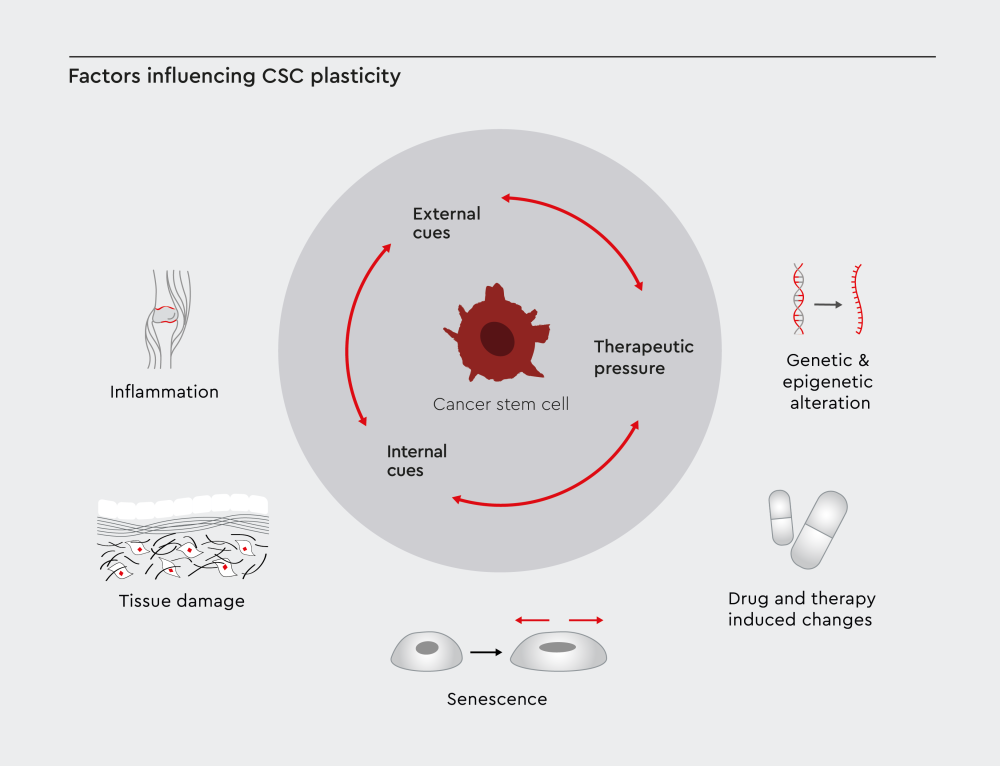
 

  • External cues, such as Inflammation, tissue damage, and senescence in the tumor microenvironment.
  • Internal cues, such as genetic and epigenetic alterations.
  • Therapeutic pressure, including treatment-induced changes.
Illustration showing the factors influencing cancer stem cell (CSC) plasticity. CSC plasticity is driven by three key factors: external cues, internal cues and therapeutic pressure. Illustration showing the factors influencing cancer stem cell (CSC) plasticity. CSC plasticity is driven by three key factors: external cues, internal cues and therapeutic pressure.

Figure 2: CSC plasticity is shaped by three main factors: external cues like inflammation, tissue damage, and senescence in the tumor microenvironment; internal cues such as genetic and epigenetic changes; and therapeutic pressure caused by treatment-induced effects.

The concept of CSC plasticity supports the idea that CSCs represent a transient cell state rather than a stable cell population. Non-stem cancer cells can acquire stem-like properties under certain conditions, and CSCs can lose stem-like characteristics and become more differentiated.25,26

Cancer stem cells in solid tumors

Solid cancers demonstrate hierarchical organization with CSCs at the top of the cellular hierarchy. CSCs were first identified in breast cancer and melanoma. Since then, researchers have found evidence of CSCs in various solid tumor types, including colon cancer, lung cancer, pancreatic cancer, prostate cancer, ovarian cancer, and glioblastoma.4,27


CSCs play an important role in cancer progression in patients with solid tumors, making them promising targets for therapeutic intervention. The self-renewal capacity and differentiation potential of CSCs contribute to their ability to promote tumor growth, repopulation after therapy, and metastasis to distant sites.4

Cancer stem cells in blood cancers

Hematological malignancies also contain CSCs, which are often called leukemia stem cells (LSCs). These cells possess self-renewal capabilities and are responsible for long-term disease maintenance.28 Researchers believe that patient outcomes in blood cancers are closely linked to the properties of LSCs. These cells have the ability to self-renew indefinitely, show resistance to conventional therapies, interact with bone marrow niches, and have the capacity to reinitiate disease.28,29


Achieving a cure in patients with blood cancer may depend on completely eradicating these persistent cells.

Drug resistance: Why do CSCs survive treatment?

Studies suggest that cancer relapse occurs because quiescent CSCs evade current therapeutic regimens through protective mechanisms mediated by their stem cell properties.3


Mechanisms of CSC drug resistance include:


  • Quiescent state: CSCs often remain dormant, avoiding cell-cycle-targeting drugs.
  • Enhanced DNA repair: Better ability to fix treatment-induced damage.
  • Drug efflux pumps: ABC transporters that remove drugs from cells.
  • Apoptosis resistance: Reduced susceptibility to programmed cell death.
  • Metabolic flexibility: Ability to switch between different energy sources.

ATP-binding cassette transporters

ATP-binding cassette (ABC) transporters have been identified as important mediators of drug resistance in CSCs. These membrane proteins act as channels that pump drugs out of cells, reducing the intracellular concentrations of anticancer drugs and limiting their therapeutic efficacy.30 ABC transporters that have been associated with chemoresistance include ABCB1 (MDR1/P-glycoprotein), ABCC1 (MRP1), and ABCG2 (BCRP).31

The tumor microenvironment and CSC niches

CSCs interact with their surrounding environment, known as the CSC niche. This microenvironment provides signals that maintain the properties of CSCs and protect them from the effects of cancer treatments.32


Components of the CSC niche include:


  • Immune cells: Can influence CSCs via secreted cytokines and growth factors or extracellular vesicles (EVs).
  • Stromal cells: Provide structural and biochemical support.
  • Extracellular matrix: Influences cell behavior and drug penetration.
  • Vasculature: Supplies nutrients and oxygen.
  • Hypoxic regions: Low-oxygen areas that may favor CSC survival.


The interaction between CSCs and their niche influences treatment resistance and metastasis.32

Signaling pathways in cancer stem cells

Several signaling pathways regulate CSC behavior and maintain their stem-like properties and their ability to evade the effects of anticancer drugs.33


CSC signaling pathways include:


  • Notch signaling: Regulates cell fate decisions and self-renewal in CSCs.
  • Hedgehog signaling: Controls stem cell characteristics and proliferation.
  • Wnt signaling: Influences cell differentiation and tissue homeostasis.
  • TGF-β signaling: Regulates epithelial-mesenchymal transition (EMT).

Epithelial-mesenchymal transition

Epithelial-mesenchymal transition (EMT) is a cellular process during which cells lose their epithelial characteristics and acquire mesenchymal properties. EMT in CSCs increases cell motility and invasiveness, enhances stem-like properties, promotes therapy resistance, and facilitates metastasis.34

Therapeutic targeting of cancer stem cells

Eliminating CSCs could lead to long-lasting remission and improve long-term treatment outcomes in patients with cancer.35 However, developing CSC-targeted therapies presents several challenges.
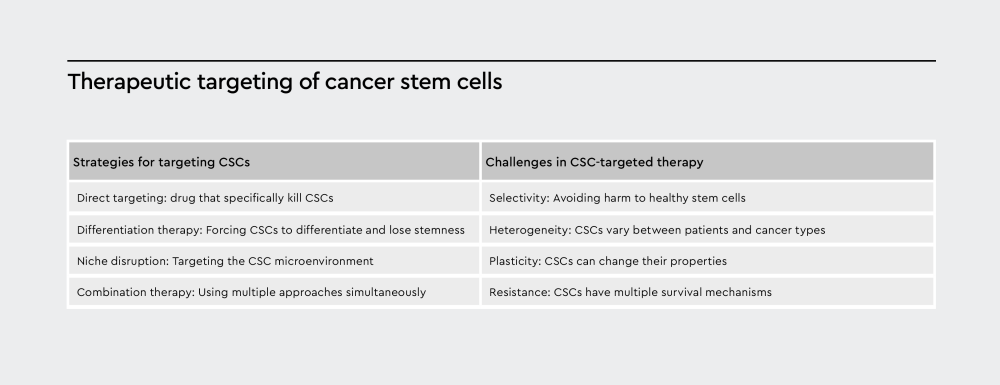
Table summarizing various strategies for targeting cancer stem cells (CSCs) and the associated challenges.Table summarizing various strategies for targeting cancer stem cells (CSCs) and the associated challenges.

Figure 3: The scheme summarizes strategies for targeting CSCs and challenges in CSC-targeted therapies. 

Implications for cancer treatment

Gaining a better understanding of CSCs can affect how we approach cancer treatment. Traditional cancer therapies that focus on tumor shrinkage may be insufficient if CSCs survive and drive recurrence. Therefore, combination approaches under development aim to target both CSCs and bulk tumor cells.4 In addition, tracking CSCs during treatment can be used to monitor treatment response, while targeting CSCs can help prevent metastasis.4

CSC-targeting immunotherapy approaches

Immunotherapy is a promising strategy for targeting CSCs, as the immune system can potentially recognize and eliminate CSCs while sparing normal cells.36 Investigational immune-based CSC strategies include engineered CAR-T cells targeting CSC markers, vaccines stimulating immune responses against CSCs, and the adoptive transfer of immune cells that target CSCs.36

Minimal residual disease and CSCs

Minimal residual disease (MRD) refers to the small number of cancer cells that remain after treatment. These cells are often enriched for CSCs and may be responsible for cancer recurrence.37 CSCs may constitute a significant portion of MRD, but traditional detection methods may miss CSCs. Recent studies suggest that CSC-specific markers could improve MRD detection, and that targeting MRD CSCs could prevent recurrence.38,39


References

Expand
  1. Loh JJ, Ma S. Hallmarks of cancer stemness. Cell Stem Cell. 2024;31(5):617-639. doi:10.1016/j.stem.2024.04.004
  2. Aponte PM, Caicedo A. Stemness in cancer: Stem cells, cancer stem cells, and their microenvironment. Stem Cells International. 2017;2017(1):5619472. doi:10.1155/2017/5619472
  3. Marzagalli M, Fontana F, Raimondi M, Limonta P. Cancer stem cells—Key players in tumor relapse. Cancers. 2021;13(3):376. doi:10.3390/cancers13030376
  4. Najafi M, Farhood B, Mortezaee K. Cancer stem cells (CSCs) in cancer progression and therapy. Journal of Cellular Physiology. 2019;234(6):8381-8395. doi:10.1002/jcp.27740
  5. Yadav AK, Desai NS. Cancer stem cells: Acquisition, characteristics, therapeutic implications, targeting strategies and future prospects. Stem Cell Rev and Rep. 2019;15(3):331-355. doi:10.1007/s12015-019-09887-2
  6. Bhat GR, Sethi I, Sadida HQ, et al. Cancer cell plasticity: From cellular, molecular, and genetic mechanisms to tumor heterogeneity and drug resistance. Cancer Metastasis Rev. 2024;43(1):197-228. doi:10.1007/s10555-024-10172-z
  7. Dagogo-Jack I, Shaw AT. Tumour heterogeneity and resistance to cancer therapies. Nat Rev Clin Oncol. 2018;15(2):81-94. doi:10.1038/nrclinonc.2017.166
  8. Lathia JD, Liu H. Overview of cancer stem cells and stemness for community oncologists. Target Oncol. 2017;12(4):387-399. doi:10.1007/s11523-017-0508-3
  9. Batlle E, Clevers H. Cancer stem cells revisited. Nat Med. 2017;23(10):1124-1134. doi:10.1038/nm.4409
  10. Prager BC, Xie Q, Bao S, Rich JN. Cancer stem cells: The architects of the tumor ecosystem. Cell Stem Cell. 2019;24(1):41-53. doi:10.1016/j.stem.2018.12.009
  11. Rahman M, Deleyrolle L, Vedam-Mai V, Azari H, Abd-El-Barr M, Reynolds BA. The cancer stem cell hypothesis: Failures and pitfalls. Neurosurgery. 2011;68(2):531. doi:10.1227/NEU.0b013e3181ff9eb5
  12. Poleszczuk J, Hahnfeldt P, Enderling H. Evolution and phenotypic selection of cancer stem cells. PLOS Computational Biology. 2015;11(3):e1004025. doi:10.1371/journal.pcbi.1004025
  13. Eun K, Ham SW, Kim H. Cancer stem cell heterogeneity: Origin and new perspectives on CSC targeting. BMB Rep. 2017;50(3):117-125. doi:10.5483/BMBRep.2017.50.3.222
  14. Abbaszadegan MR, Bagheri V, Razavi MS, Momtazi AA, Sahebkar A, Gholamin M. Isolation, identification, and characterization of cancer stem cells: A review. Journal of Cellular Physiology. 2017;232(8):2008-2018. doi:10.1002/jcp.25759
  15. Zhang Y, An J, Liu M, et al. Efficient isolation, culture, purification, and stem cell expression profiles of primary tumor cells derived from uterine cervical squamous cell carcinoma. American Journal of Reproductive Immunology. 2020;84(2):e13251. doi:10.1111/aji.13251
  16. Tirino V, Desiderio V, Paino F, et al. Cancer stem cells in solid tumors: an overview and new approaches for their isolation and characterization. The FASEB Journal. 2013;27(1):13-24. doi:10.1096/fj.12-218222
  17. Meyfour A, Pahlavan S, Mirzaei M, Krijgsveld J, Baharvand H, Salekdeh GH. The quest of cell surface markers for stem cell therapy. Cell Mol Life Sci. 2021;78(2):469-495. doi:10.1007/s00018-020-03602-y
  18. Kim WT, Ryu CJ. Cancer stem cell surface markers on normal stem cells. BMB Rep. 2017;50(6):285-298. doi:10.5483/BMBRep.2017.50.6.039
  19. Ricardo S, Vieira AF, Gerhard R, et al. Breast cancer stem cell markers CD44, CD24 and ALDH1: expression distribution within intrinsic molecular subtype. Journal of Clinical Pathology. 2011;64(11):937-946. doi:10.1136/jcp.2011.090456
  20. Keysar SB, Jimeno A. More than markers: Biological significance of cancer stem cell-defining molecules. Molecular Cancer Therapeutics. 2010;9(9):2450-2457. doi:10.1158/1535-7163.mct-10-0530
  21. Leushacke M, Barker N. Lgr5 and Lgr6 as markers to study adult stem cell roles in self-renewal and cancer. Oncogene. 2012;31(25):3009-3022. doi:10.1038/onc.2011.479
  22. Leung C, Tan SH, Barker N. Recent advances in Lgr5+ stem cell research. Trends in Cell Biology. 2018;28(5):380-391. doi:10.1016/j.tcb.2018.01.010
  23. Rad SMAH, Bamdad T, Sadeghizadeh M, Arefian E, Lotfinia M, Ghanipour M. Transcription factor decoy against stem cells master regulators, Nanog and Oct-4: a possible approach for differentiation therapy. Tumor Biol. 2015;36(4):2621-2629. doi:10.1007/s13277-014-2884-y
  24. Liu K, Lin B, Zhao M, et al. The multiple roles for Sox2 in stem cell maintenance and tumorigenesis. Cellular Signalling. 2013;25(5):1264-1271. doi:10.1016/j.cellsig.2013.02.013
  25. Thankamony AP, Saxena K, Murali R, Jolly MK, Nair R. Cancer stem cell plasticity – A deadly deal. Front Mol Biosci. 2020;7. doi:10.3389/fmolb.2020.00079
  26. Lee G, Hall RR, Ahmed AU. Cancer stem cells: Cellular plasticity, niche, and its clinical relevance. J Stem Cell Res Ther. 2016;6(10):363. doi:10.4172/2157-7633.1000363
  27. Schatton T, Frank MH. Cancer stem cells and human malignant melanoma. Pigment Cell & Melanoma Research. 2008;21(1):39-55. doi:10.1111/j.1755-148X.2007.00427.x
  28. Choi HS, Kim BS, Yoon S, Oh SO, Lee D. Leukemic stem cells and hematological malignancies. International Journal of Molecular Sciences. 2024;25(12):6639. doi:10.3390/ijms25126639
  29. Barreto IV, Pessoa FMC de P, Machado CB, et al. Front Oncol. 2022;12:931050. doi:10.3389/fonc.2022.931050
  30. Begicevic RR, Falasca M. ABC transporters in cancer stem cells: Beyond chemoresistance. International Journal of Molecular Sciences. 2017;18(11):2362. doi:10.3390/ijms18112362
  31. Ceballos MP, Rigalli JP, Ceré LI, Semeniuk M, Catania VA, Ruiz ML. ABC transporters: Regulation and association with multidrug resistance in hepatocellular carcinoma and colorectal carcinoma. Current Medicinal Chemistry. 2019;26(7):1224-1250. doi:10.2174/0929867325666180105103637
  32. Ye J, Wu D, Wu P, Chen Z, Huang J. The cancer stem cell niche: cross talk between cancer stem cells and their microenvironment. Tumor Biol. 2014;35(5):3945-3951. doi:10.1007/s13277-013-1561-x
  33. Zeng Z, Fu M, Hu Y, Wei Y, Wei X, Luo M. Regulation and signaling pathways in cancer stem cells: implications for targeted therapy for cancer. Mol Cancer. 2023;22:172. doi:10.1186/s12943-023-01877-w
  34. Shibue T, Weinberg RA. EMT, CSCs, and drug resistance: the mechanistic link and clinical implications. Nat Rev Clin Oncol. 2017;14(10):611-629. doi:10.1038/nrclinonc.2017.44
  35. El-Tanani M, Rabbani SA, Satyam SM, et al. Deciphering the role of cancer stem cells: drivers of tumor evolution, therapeutic resistance, and precision medicine strategies. Cancers. 2025;17(3):382. doi:10.3390/cancers17030382
  36. Izadpanah A, Mohammadkhani N, Masoudnia M, et al. Update on immune-based therapy strategies targeting cancer stem cells. Cancer Medicine. 2023;12(18):18960-18980. doi:10.1002/cam4.6520
  37. Badia-Ramentol J, Linares J, Gómez-Llonin A, Calon A. Minimal residual disease, metastasis and immunity. Biomolecules. 2021;11(2):130. doi:10.3390/biom11020130
  38. Philchenkov A, Dubrovska A. Cancer stem cells as a therapeutic target: current clinical development and future prospective. Stem Cells. 2024;42(3):173-199. doi:10.1093/stmcls/sxad092
  39. Warrier S, Patil M, Bhansali S, Varier L, Sethi G. Designing precision medicine panels for drug refractory cancers targeting cancer stemness traits. Biochimica et Biophysica Acta (BBA) - Reviews on Cancer. 2021;1875(1):188475. doi:10.1016/j.bbcan.2020.188475


Related blog articles