
Cryopreservation is an integral part of biomedical research and clinical applications. However, maintaining cell viability and function during freezing and thawing can be challenging. Serum-free cryopreservation media offer a more defined alternative to serum-containing freezing media, helping reduce serum-associated variability, contamination risk, and unwanted biological effects while supporting reproducibility and standardization — read on to learn why.
What is a serum-free cell freezing medium?
Serum-free cell freezing medium is a ready-to-use cryopreservation solution for freezing cells without serum, such as fetal bovine serum. Unlike traditional freezing media that rely on serum as a protective component, serum-free formulations use alternative cryoprotective ingredients to help protect cells during freezing and thawing. Common ingredients of serum-free cryopreservation media include dimethyl sulfoxide (DMSO) and methylcellulose.1
Serum-free, animal component-free, xeno-free, protein-free, and chemically defined formulations are related but distinct. Serum-free media exclude serum, while animal component-free and xeno-free media follow additional formulation criteria related to the origin of their components. Depending on the formulation, serum-free freezing media may also be animal component-free, xeno-free, protein-free, or chemically defined, but these terms are not interchangeable and should be assessed separately.
At a glance: Key formulation terms in cryopreservation media
| Term | What it means | Why it matters |
|---|---|---|
| Serum-free | Does not contain serum, such as fetal bovine serum (FBS). | Helps reduce serum-associated variability and unwanted biological effects. |
| Animal component-free | Does not contain animal-derived components. | Supports workflows where animal-derived materials should be avoided. |
| Xeno-free | Does not contain components from a non-human species. | Relevant for workflows aiming to reduce exposure to non-human biological materials. |
| Protein-free | Does not contain added proteins. | Helps reduce variability linked to undefined or complex protein components. |
| Chemically defined | Contains known components at defined concentrations. | Supports standardization and reproducibility by reducing undefined formulation variables. |
Table 1: Common cryopreservation media terms: what they mean and why they matter
Why use a serum-free cell freezing medium?
A key reason for using serum-free cell freezing media is to minimize the risk of contamination and reduce batch-to-batch variability. The composition and quality of serum may differ considerably from batch to batch.2 In addition, mixing cells with traditional freezing media can introduce bioactive factors, antibodies, or toxins from the animal serum.3 These factors can have unpredictable effects on the physiology of the cells and influence the results of downstream assays.2,3
Advantages of serum-free cell freezing formulations
In today’s fast-paced world of cell research, the choice of cell freezing medium can have a significant impact on the success of experiments and the integrity of cells.3 Serum-free cryopreservation media can overcome various limitations of traditional freezing media (Figure 1). Unlike traditional cryomedia, serum-free cell freezing solutions provide:
- Low risk of contamination: Fetal bovine serum (FBS) or other animal-derived serum components used in traditional cryopreservation media can contaminate cells with viruses, mycoplasma, or other pathogens.4 By eliminating serum, these formulations help reduce the risk of contamination.5
- High reproducibility and standardization: The composition of serum can vary between batches, leading to inconsistencies in results.2 Serum-free media allow for better control and standardization of the cryopreservation process.6
- Defined composition: Compared to serum-containing media, serum-free cryopreservation formulations have a more defined chemical composition. By offering precise control over the cellular microenvironment, serum-free media can lead to enhanced and predictable cell performance after thawing.
- Enhanced cell recovery: Serum-free cryopreservation media can support post-thaw recovery when the formulation is suitable for the specific cell type, protocol, and downstream application.7,8 This is particularly important when working with sensitive cell types or valuable primary cell samples.
- Low immunogenicity: Inflammatory cytokines in the animal serum can trigger immune responses in cultured cells.2 By eliminating serum-derived immunological triggers in cell cultures, serum-free solutions improve cell recovery rates and overall experimental success.
- More ethical approach: Serum-free cell freezing media overcome the need to use animals for serum and other animal-derived products. This offers a more humane and ethical alternative to traditional cryopreservation media.9
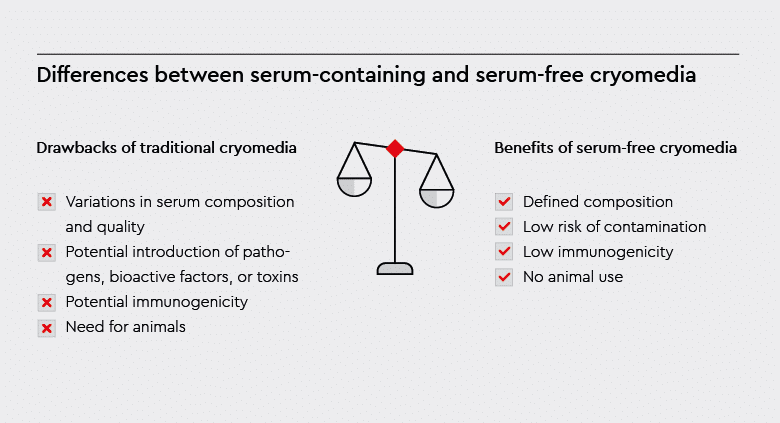
Figure 1: Differences between serum-containing and serum-free freezing media.
Serum-containing cryomedia may introduce serum-derived variability, undefined biological factors, and animal-derived components. Serum-free cryopreservation media are designed to provide a more defined freezing environment and reduce serum-associated sources of variability.
Cell type compatibility
From primary cells to immortalized cell lines, serum-free cryomedia are designed to support the cryopreservation of a wide range of cell types.1 In addition to established cell lines commonly used in research, such as HEK293, HeLa, NIH/3T3, serum-free cell freezing formulations are ideal for the following sensitive cell types:
- Primary cells: Primary human and animal cells, including fibroblasts, epithelial cells, and endothelial cells, are particularly susceptible to changes in their environment.10 The defined composition and enhanced performance of serum-free media ensure optimal preservation of primary cells.
- Stem cells: Maintaining the properties of embryonic stem cells (ESCs), induced pluripotent stem cells (iPSCs), mesenchymal stem cells (MSCs), and neuronal progenitors during cryopreservation is critical for the success of downstream applications.11,12 For stem cell-specific considerations, see our guide to stem cell cryopreservation.
- Specialized cells: Cells derived from specific tissues or organs, including neurons, cardiomyocytes, and hepatocytes display a notable responsiveness to fluctuations in their environment.13 Cryopreservation in a defined and controlled environment can be key to their survival during long-term storage and their functionality in post-thawing assays.10
Diverse applications of serum-free cryopreservation media
The broad compatibility of serum-free cryomedia underscores their applicability across diverse research domains and clinical applications.7 This ensures that researchers can preserve the integrity of their precious cell populations with confidence. The advanced performance of serum-free cryopreservation media makes them ideal for various therapeutic and translational research applications:
- Regenerative medicine: Stem cells, engineered tissues, and organoids benefit from the defined composition and enhanced performance of serum-free cell freezing media. This ensures optimal viability and maintenance of cell functionality during long-term storage.14
- Drug discovery: In drug research and development, precision and robustness are of utmost importance. Serum-free formulations ensure that cells used in drug-screening assays maintain their integrity, without interference from serum-derived factors.15
- Cell-based therapies: From CAR-T cells to gene therapies, serum-free cell freezing media support the development of advanced cell-based therapies.16 These therapies rely on robust, reproducible cell banks, and serum-free media deliver just that.
Innovations and emerging trends in cell freezing
Maintaining viable, healthy cells after long-term cryogenic storage is critical but challenging. Innovations in cell freezing include novel cryoprotectants, improved freeze-thaw protocols, automated high-throughput cryopreservation systems, and optimized freezing media.14,17
A notable trend is the increasing use of serum-free and animal component-free formulations to support reproducibility, standardization, and reduced reliance on animal-derived materials. These approaches are especially relevant in workflows where defined conditions, traceability, and consistent post-thaw handling are important. In addition, the integration of antioxidants into cryopreservation methods is emerging as a promising approach to counteract oxidative stress and improve cell viability and functionality after thawing.18 The combination of serum-free cryopreservation formulations with antioxidants represents a significant advance in cryopreservation, especially for cells that are sensitive to oxidative stress.19
Together, these trends reflect a broader shift towart more defined, standardized, and application-specific cryopreservation workflows.
Cryo-SFM Plus: our new animal component-free cryomedium
Cryo-SFM Plus allows standardization of freezing protocols while reducing variability in downstream assays by offering a chemically defined formula free of proteins and animal components.
Key characteristics of Cryo-SFM Plus:
- Defined composition: With Cryo-SFM Plus, you obtain a precisely defined formulation for consistent results. No more guesswork — just reproducible outcomes every time.
- Protein-free: Ensure a standardized and controlled culture environment for precious cell samples. Cryo-SFM Plus is free from proteins, eliminating unwanted variability.
- Animal component-free: Enjoy a regulatory-friendly format that gives you peace of mind. Having no animal-derived components means compliance without compromise.
- Antioxidant-enhanced: The innovative antioxidant technology preserves cell viability, attachment, and growth.
Key benefits of Cryo-SFM Plus:
- Optimal cell yield: Experience maximum cell recovery after thawing. Cryo-SFM Plus ensures that your experiments proceed smoothly, whether you’re working with primary cells, stem cells, or established cell lines.
- Minimal freeze damage: Protect your valuable cell samples from damage during freezing and thawing. Cryo-SFM Plus minimizes freeze-induced stress, preserving cell integrity.
- Versatile: Cryo-SFM Plus adapts to your research needs and is suitable for various cell types — from delicate stem cells to established lines.
- Powered by patented technology: Rest assured with our patented* technology. Cryo-SFM Plus is backed by rigorous research and innovation, ensuring top-tier performance.
*Patent issued in Germany and pending approval in other countries.
“Optimal cryopreservation is paramount for cell culture excellence. With Cryo-SFM Plus, we introduce a breakthrough solution meticulously developed to elevate cell culture standards. Through extensive testing and refining, we've crafted a solution that will significantly improve cell culture practices. The results speak for themselves, demonstrating enhanced post-thaw growth and reproducibility. I'm truly excited to unveil this innovation to the scientific community, inviting you to experience the transformative potential firsthand. Try our new Cryo-SFM Plus and witness its unparalleled impact on cell culture performance.”
Dr. Hagen Wieland
Team Leader - Research and Development at PromoCell
Frequently asked questions
References
Expand
- Campbell LH, Brockbank KGM. Serum-free solutions for cryopreservation of cells. In Vitro Cell Dev Biol Anim. 2007;43(8-9):269-275. doi:10.1007/s11626-007-9039-z
- Liu S, Yang W, Li Y, Sun C. Fetal bovine serum, an important factor affecting the reproducibility of cell experiments. Sci Rep. 2023;13(1):1942. doi:10.1038/s41598-023-29060-7
- Jang TH, Park SC, Yang JH, et al. Cryopreservation and its clinical applications. Integr Med Res. 2017;6(1):12-18. doi:10.1016/j.imr.2016.12.001
- Pilgrim CR, McCahill KA, Rops JG, Dufour JM, Russell KA, Koch TG. A review of fetal bovine serum in the culture of mesenchymal stromal cells and potential alternatives for veterinary medicine. Front Vet Sci. 2022;9:859025. doi:10.3389/fvets.2022.859025
- Duarte AC, Costa EC, Filipe HAL, et al. Animal-derived products in science and current alternatives. Biomater Adv. 2023;151:213428. doi:10.1016/j.bioadv.2023.213428
- Germann A, Schulz JC, Kemp-Kamke B, Zimmermann H, von Briesen H. Standardized serum-free cryomedia maintain peripheral blood mononuclear cell viability, recovery, and antigen-specific T-cell response compared to fetal calf serum-based medium. Biopreserv Biobank. 2011;9(3):229-236. doi:10.1089/bio.2010.0033
- Filbert H, Attig S, Bidmon N, et al. Serum-free freezing media support high cell quality and excellent ELISPOT assay performance across a wide variety of different assay protocols. Cancer Immunol Immunother. 2013;62(4):615-627. doi:10.1007/s00262-012-1359-5
- Kaiser D, Otto NM, McCallion O, et al. Freezing medium containing 5% DMSO enhances the cell viability and recovery rate after cryopreservation of regulatory T cell products ex vivo and in vivo. Front Cell Dev Biol. 2021;9:750286. doi:10.3389/fcell.2021.750286
- Merten OW. Safety issues of animal products used in serum-free media. Dev Biol Stand. 1999;99:167-180.
- Meneghel J, Kilbride P, Morris GJ. Cryopreservation as a key element in the successful delivery of cell-based therapies—A review. Front Med. 2020;7:592242. doi:10.3389/fmed.2020.592242
- Kent L. Freezing and thawing human embryonic stem cells. J Vis Exp. 2009;(34). doi:10.3791/1555
- Alasmar S, Huang J, Chopra K, et al. Improved cryopreservation of human induced pluripotent stem cell (iPSC) and iPSC-derived neurons using ice-recrystallization inhibitors. Stem Cells. 2023;41(11):1006-1021. doi:10.1093/stmcls/sxad059
- Kolaja K. Stem cells and stem cell-derived tissues and their use in safety assessment. J Biol Chem. 2014;289(8):4555-4561. doi:10.1074/jbc.R113.481028
- Uhrig M, Ezquer F, Ezquer M. Improving cell recovery: freezing and thawing optimization of induced pluripotent stem cells. Cells. 2022;11(5). doi:10.3390/cells11050799
- Kamiloglu S, Sari G, Ozdal T, Capanoglu E. Guidelines for cell viability assays. Food Front. 2020;1(3):332-349. doi:10.1002/fft2.44
- Cui Y, Nash AM, Castillo B, et al. Development of serum-free media for cryopreservation of hydrogel encapsulated cell-based therapeutics. Cell Mol Bioeng. 2022;15(5):425-437. doi:10.1007/s12195-022-00739-7
- Cottle C, Porter AP, Lipat A, et al. Impact of cryopreservation and freeze-thawing on therapeutic properties of mesenchymal stromal/stem cells and other common cellular therapeutics. Curr Stem Cell Rep. 2022;8(2):72-92. doi:10.1007/s40778-022-00212-1
- Len JS, Koh WSD, Tan S-X. The roles of reactive oxygen species and antioxidants in cryopreservation. Biosci Rep. 2019;39(8). doi:10.1042/BSR20191601
- Lee J-H, Park H-J, Kim Y-A, et al. Establishment of a serum-free hepatocyte cryopreservation process for the development of an “off-the-shelf” bioartificial liver system. Bioengineering (Basel). 2022;9(12). doi:10.3390/bioengineering9120738
Contact our experts
Choosing a suitable cryopreservation medium depends on your cell type, freezing protocol, storage conditions, and downstream application. Our cell culture experts can help you assess whether a serum-free or animal component-free freezing medium is suitable for your workflow.
Contact us to learn more about Cryo-SFM Plus and discuss your cryopreservation requirements.