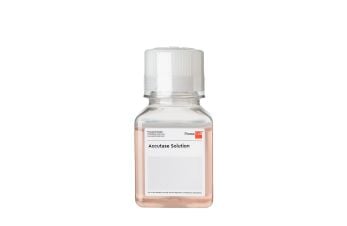
When should I use Accutase instead of Trypsin for cell detachment?
Both Accutase and Trypsin/EDTA are commonly used for detaching adherent cells during routine cell culture. The most suitable reagent depends on the cell type and the intended downstream application. Use Accutase when a gentler detachment method is required, especially for sensitive primary cells or applications where cell surface proteins need to remain intact. Accutase is particularly recommended if you:
need to preserve cell surface markers for flow cytometry, cell sorting, or immunophenotyping
are working with sensitive or fragile primary cells
want to maximize cell viability after detachment
require prolonged incubation times for difficult-to-detach cells
need a detachment reagent that typically does not require an inactivation step
Compared with Trypsin/EDTA, Accutase is gentler on cells, better preserves surface epitopes, and generally results in higher post-detachment viability.
Use Trypsin/EDTA for routine cell passaging of most adherent cell types. It is the most widely used cell detachment reagent and provides efficient and reliable cell harvesting for standard subculture procedures.
For many primary cell types, either reagent can be used successfully. However, for certain cell types, PromoCell recommends the use of Accutase. Please refer to the Instruction Manual of the respective cell type for specific recommendations.