




From clumps to consistency: Advancing reproducible 3D cancer models
Reliable 3D cancer models are essential – but conventional tumorsphere workflows can still produce inconsistent, heterogeneous clumps.
In this webinar, we'll introduce a streamlined, matrix free workflow built around our 3D Tumorsphere Medium XF. This approach enables the generation of uniform, robust tumorspheres across multiple cancer types – without additional tools or extracellular matrices. We'll share data showing improved tumorsphere formation efficiency and long term expansion of patient derived tumor cells while preserving key tumor characteristics.
We’ll then explore how these robust spheroids can be integrated into the MIVO® cancer-on-chip platform, from React4Life, to move from static cultures to dynamic, physiologically relevant systems.
By recreating key biophysical cues of the tumor microenvironment, this approach supports more predictive studies of tumor behavior and drug response.
What you'll learn:
- How to generate uniform, reproducible tumorspheres using a matrix free workflow
- Strategies to support cancer stem cell–driven growth across cancer types
- How to integrate 3D spheroids into dynamic cancer on chip systems
- How fluid flow and shear stress improve modeling of tumor invasion and drug efficacy
Watch the video
Please fill out the form to access the video.
Related resources
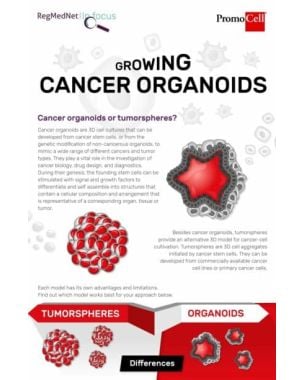
Growing cancer organoids
Cancer organoids or tumorspheres? Our infographic will help you find the right model for your research.
Tumorsphere cell culture: Method and efficiency
Read about the tumorsphere culture and the tumorsphere formation efficiency, including protocols.
Adoptive cell therapies: advancing cancer treatment for solid tumors
Discover the latest insights and strategies shaping the future of cancer treatment.
Modeling the esophageal adenocarcinoma microenvironment within a cancer-on-chip platform
Discover how to use 3D Tumorsphere Medium XF on the MIVO® cancer-on-chip platform to culture esophageal cancer spheroids, and create more physiologically relevant cancer models.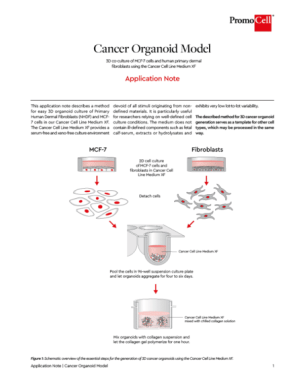
Cancer organoid model
This application note describes a method for easy 3D organoid culture of Primary Human Dermal Fibroblasts (NHDF) and MCF-7 cells in our Cancer Cell Line Medium XF.